SIEM + SOAR, one platform
Log collection, detection, correlation, and orchestrated response share one data model, so engineering has one integration surface and leadership has one record of posture, incidents, and audit evidence.
Platforms / AI-Enabled Security Operations
We built VirtueShieldX for our own SOC, because alert volume grows faster than any SOC can hire. One cloud-native, multi-tenant system detects, investigates, prioritizes, responds, and learns. AI agents handle tier-1 work; a named human makes every containment decision.
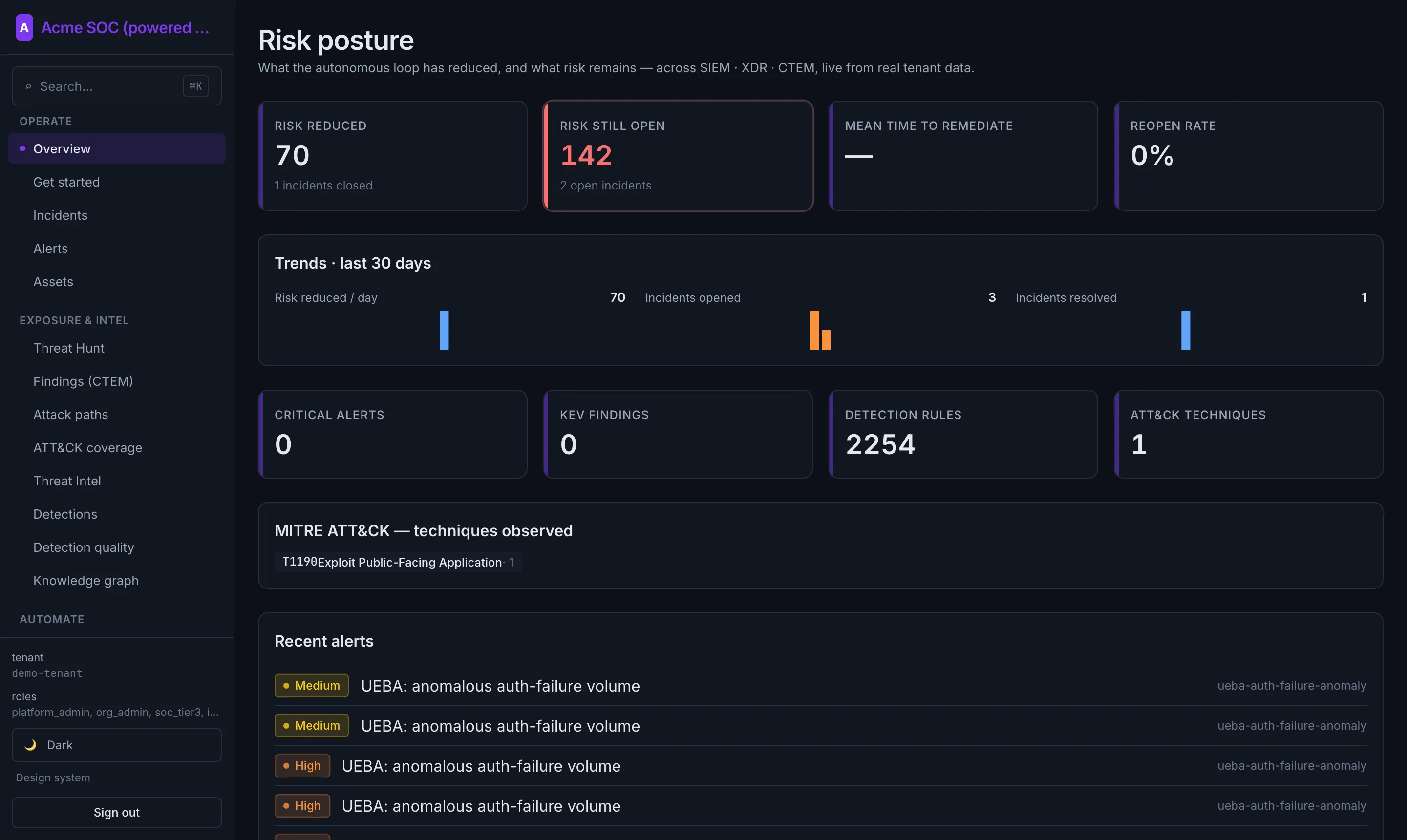
Risk posture across SIEM, XDR, and CTEM: what the loop has reduced and what remains. Leadership reviews start here.
01
Endpoint, log, and threat-intel telemetry runs through the ATT&CK-mapped rules and behavioral analytics around the clock.
02
AI triage gathers entities, history, and related signals into a case before an analyst opens it.
03
Incidents are ranked by risk, so analysts work a short list.
04
A named analyst decides. Approved playbooks then run containment and recovery, with an optional dry run first.
05
Outcomes feed detection tuning. This is the newest capability: the first end-to-end production runs completed in June 2026, under analyst supervision and human approval gates.
Log collection, detection, correlation, and orchestrated response share one data model, so engineering has one integration surface and leadership has one record of posture, incidents, and audit evidence.
Every rule maps to an attacker technique, so 'are we covered for lateral movement?' can be checked on the coverage grid.
User and entity baselines catch credential misuse and insider patterns that signatures miss.
The 3am page arrives as a case with context, fused signals, and a proposed action. Nothing consequential runs until a named analyst approves it.
Architecture
SIEM, analytics, and SOAR share one tenant-isolated data model from telemetry to response.
Ingest
Wazuh endpoint and log telemetry, ThreatFox and other curated feeds, and Trivy vulnerability findings, normalized into that data model.
Detect
ATT&CK-mapped rules and user and entity behavioral analytics (UEBA) correlate signals, so many alerts become one cross-domain incident.
Decide
Incidents are enriched, fused, and risk-ranked automatically before an analyst opens the case.
Act
Containment playbooks run only after a named analyst approves, with an optional dry run first.
Multi-tenant with strict per-tenant data isolation. Deployment and data-handling terms are agreed during the pilot.
Per-tenant data isolation; data-handling terms committed in your service agreement. See Trust & Company Facts.
Real screens from a live demo tenant. Client data is redacted; the interface and data model are exactly what your team works in.
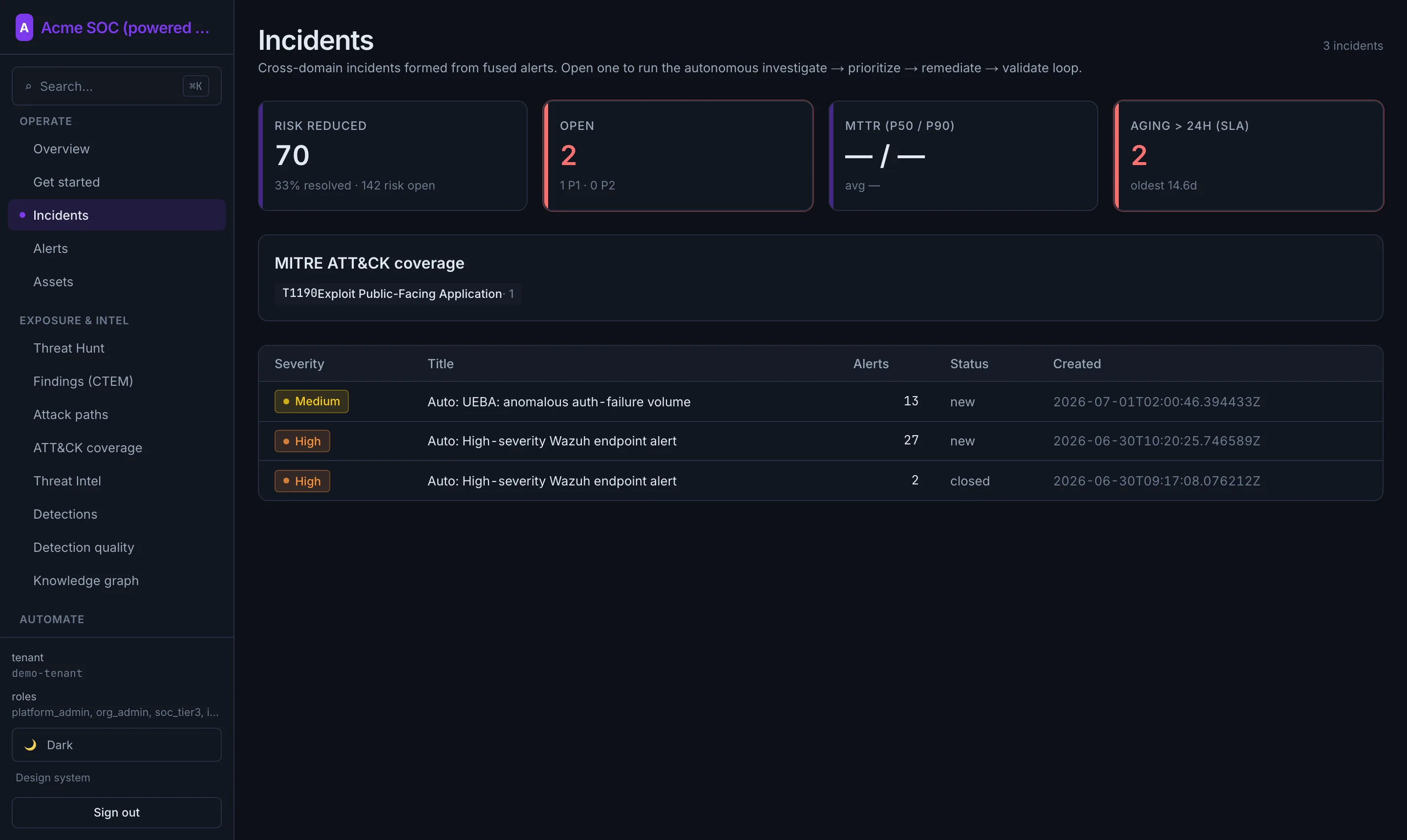
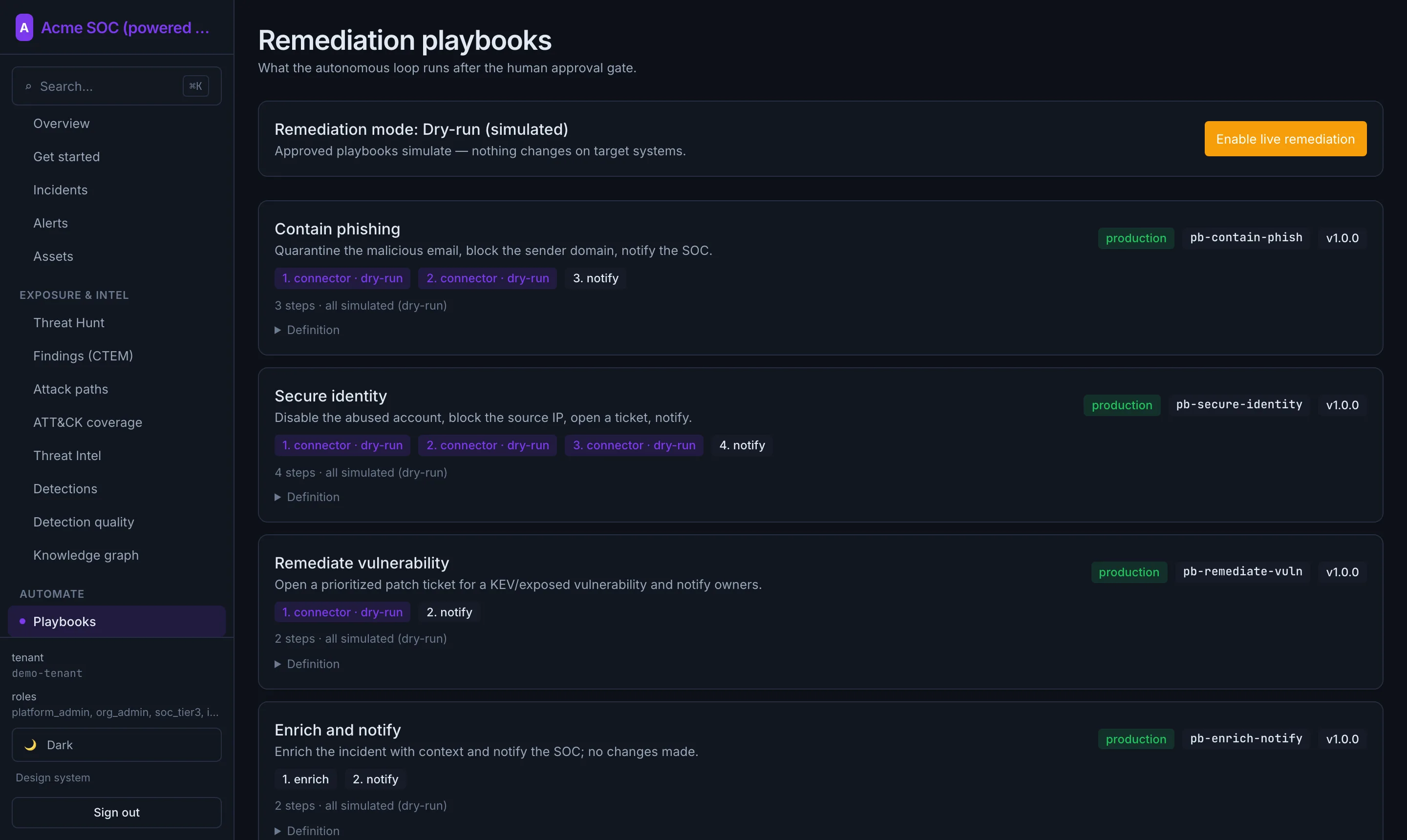
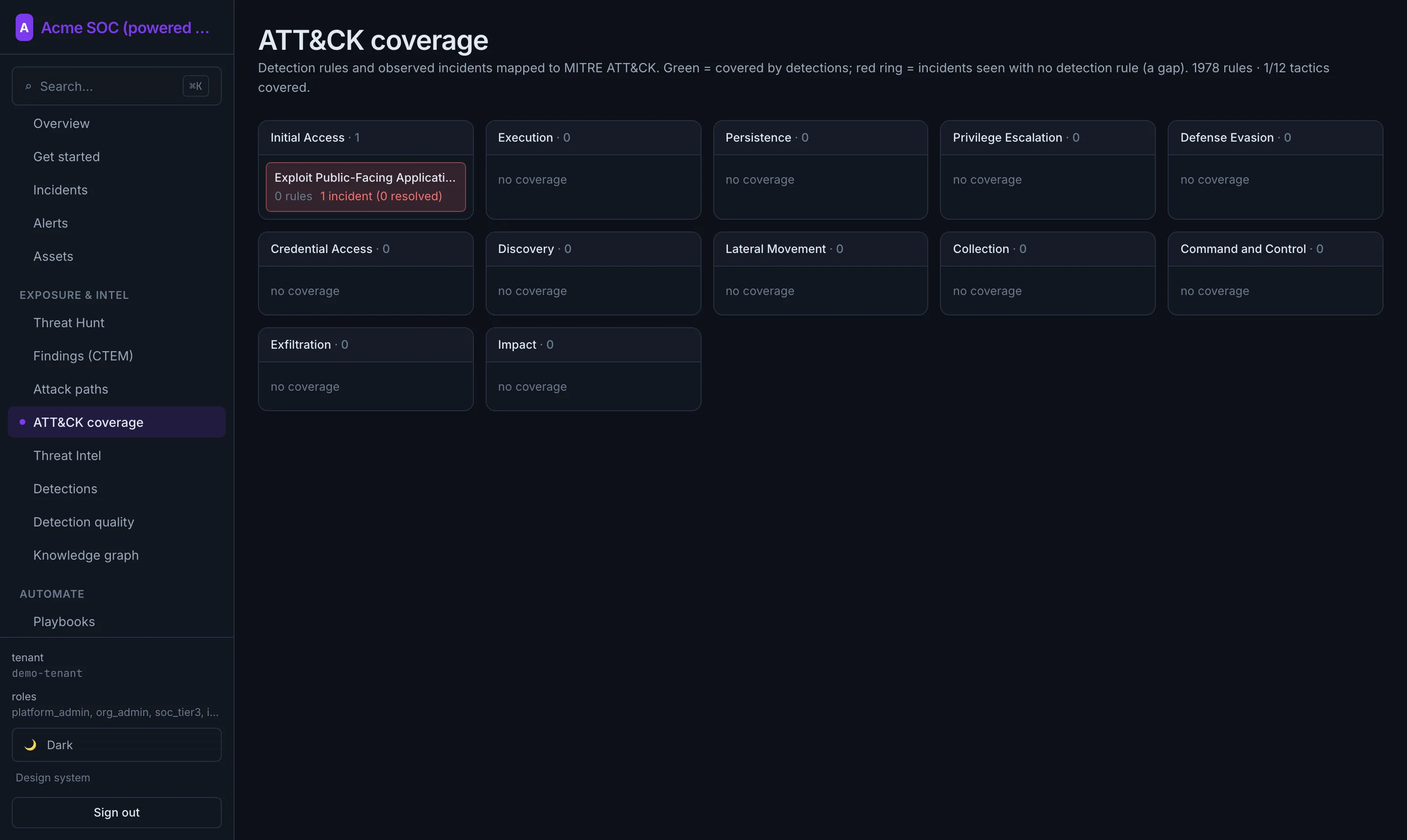
VirtueShieldX runs our Managed Cybersecurity services and is the console our analysts use every shift. A 30-day pilot runs on the same system against your own telemetry.
Managed Cybersecurity services →A session with the SOC team that runs the platform daily, or a 30-day pilot on detections from your own estate.